
Nothing is real
Ancient ideas about our material connections to the natural world

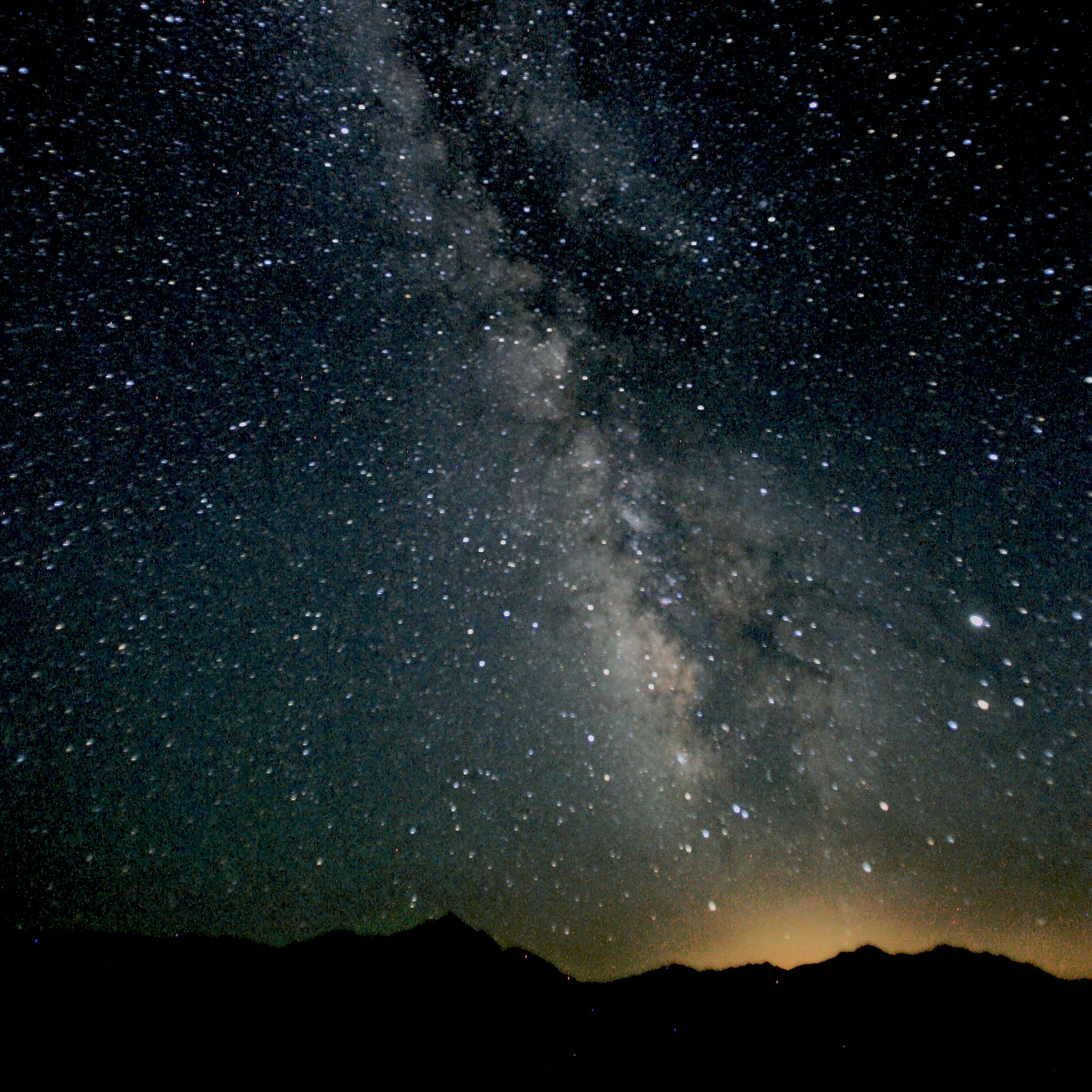
We are all star stuff, as Carl Sagan said, but much more immediately we are all made of plant stuff. For some of us, a portion of that plant stuff has moved through an animal before it reaches us. Another portion arrives via the oxygen in the air. Atoms in gases, liquids, and solids move between plants, animals, fungi, microbes, and humans. Plants also provide our connection to the sun whose energy moves as light through the nothingness of space to allow the growth of plants to keep us alive, not to mention all the other effects the sun has on our planet and us humans. Lots of material and energy connections to plants, nature, and the universe that keep us alive.
This being the first post on the Other Connections Substack, I will start at the beginning and explore what people before science thought about our material connections to nature. There is that ‘something’, star stuff, which moves and connects us to our living planet. And that ‘something’ moves in a void between atoms that makes these movements possible. That void is the ‘nothing’ that allows the ‘something’ to move. Who came up with the idea that “nothing is real” to quote John Lennon[i] and that a void or vacuum is required to make any movement possible?
‘Something’ and ‘nothing’ in early Greek philosophy
The earliest surviving writings about that ‘something’ that connects us with plants, nature, air, and water comes from philosophers in Ancient Greece. To most of them, the ‘something’ that connects us with the natural world consisted of air, water, fire, and earth, now known as the cosmic elements. Note that ‘nothing’ or a void do not show up in this list of elements.
A belief in between three and five cosmic elements was common in many parts of the ancient world. In India, Charvaka philosophers of the 6th century BCE believed in four elements. The Wuxing philosophy in China during the 3rd Century BCE, the Babylonians, and ancient Egyptians had five. It seems almost certain that a belief in cosmic elements existed in all prehistoric human populations. When philosophers in Ancient Greece wrote about ‘something’ then that almost always consisted of one or more of these elements, and some thought that one of these elements was the original ‘something’ that could transform into the other elements.
The earliest Greek philosophers are known today as the Presocratics of the 6th to 5th century BCE, because they mostly preceded Socrates, one of the most famous philosophers of all time. There were many, but I’ll start with the so-called Eleatics, who lived in Elea, a Greek colony in what is now Campania on the West coast of southern Italy. One of these was Parmenides, who may have started out as a local politician in Elea before being converted to philosophy by some of the many philosophers who roamed his town in those days. A brilliant mind, he realized that we cannot completely trust our senses because those can be deceiving. We therefore must judge reality by logical reason and distrust our senses. Trusting only in reason, he argued that it was impossible for there to be ‘nothing’.
Parmenides argued that if nothing ‘is’ then it is not nothing, and if it ‘isn’t’ then it doesn’t exist. Philosophers back then delighted in such arguments and some still do today. If there cannot be nothing, then everything is something, and it fills all the available space. The universe then must be completely filled with stuff, and that stuff cannot move, because there is nowhere to move to. If the stuff can’t move, then all movement and change must be illusions. That was the conclusion that Parmenides came to.
True, we cannot trust our senses. But Parmenides’ premise about the stuff filling all available space was wrong and therefore his logical conclusion was as well. If our senses tell us that everything moves and changes, then perhaps we should conclude that there is movement and change in the world, even if we do not always perceive all those changes correctly. Reasoning without considering the evidence makes for poor explanations.
Where does this leave plants and all the other parts of nature? If you follow Parmenides, they are nothing to worry about, because they are part of the illusion. So, this reasoning gets us nowhere, and the only reason why Parmenides makes an appearance here is that it shows how important it is to accept the existence of a void or a ‘nothing’ if one wants to explain how our world works.
Herakleitos[ii] of Ephesus, far away on the Aegean coast of what is now Turkey, took a radically different view of the world, arguing that change and movement in nature are constant and real. Two famous sayings of his are ‘everything flows’ and ‘you cannot step into the same river twice’. These thoughts foreshadow the understanding of modern geologists, ecologists, and biologists of constant changes in rocks, the hydrological cycle of water, and living organisms. He was really on to something. But he did not think of matter as we do today, proposing that the four elements were constantly in conflict, moving, and transforming into each other, requiring no void to move in. He even proposed that the sun was newly generated every day in an endless transformation process. Except for recognizing constant change and conflict, he was hardly a forerunner of ecological science.
Born to a noble family, Herakleitos rejected wealth and society and lived as a hermit up in the mountains where he foraged for plants. By all accounts, he was an arrogant, grumpy, and antisocial character who thought of himself as vastly superior to everyone else. His writings are so dense and intentionally difficult that even Socrates later admitted to understanding only half. These attitudes are reputed to have led to Herakleitos’ death when spurning the advice of doctors, he decides that he knew best how to cure an edema in his legs by burying himself in manure and promptly perishing of heat stroke. There is a lesson in there somewhere, but it is a bit sad to think of the author of ‘everything flows’ as such an unlikable character.[iii]
The Atomists on the nature of ‘something’ and ‘nothing’
In stark contrast, Demokritos from Abdera, on the northern coast of the Aegean Sea, was known as the laughing philosopher, because his philosophy placed immense value on happiness. He lived to a ripe old age, and one likes to imagine him as a cheerful, happy, and popular man, surrounded by friends. Demokritos is often credited as the originator of the idea of atoms, but many attribute the original idea to his teacher Leukippos. Leukippos, however, is a shadowy figure in history, and some even claim that he never existed. Be that as it may, one or both of them hit on the idea that if you keep dividing substances into smaller and smaller fragments then eventually you get to a smallest size when further division is no longer possible.
That indivisible smallest object they called an atom, meaning ‘uncuttable’ in Greek. Never mind that today’s quantum mechanics divide atoms into many smaller parts, protons, neutrons, and electrons, which themselves consist of smaller particles. Fortunately, that is not relevant for our story. But atoms are relevant, because they exist, and because they explain all the physical connections that humans have with plants, nature, and the atmosphere. By the way, the philosopher Kaṇāda in India independently came up with the same idea of atoms a couple of centuries after Demokritos.
The Atomists introduced the idea of ‘nothing’, claiming that atoms move around freely and unpredictably in a limitless void of ‘nothing’ like “motes of dust in a sunbeam,” as the Roman poet Lucretius later wrote, also foretelling the idea of random Brownian motion. Lucretius described in his poem ‘On the nature of things’[iv] how atoms move from Earth into plants and as food into humans, perhaps the first accurate description of physical connections between the non-living environment, plants, and humans. Ecologists would describe this as part of the carbon, nutrient, and water cycles. In this description, Lucretius followed the earlier Greek philosopher Epikouros, the founder of a school in Athens known as ‘the Garden’, which stood out for admitting both men and women and for adopting Demokritos’ ideas about atoms and the infinite void.
Demokritos is reported to have written about plants, nature, and the atmosphere, but all his writings are lost. Glimpses of these subjects are in Epikouros’ surviving ‘Letter to Pythocles,’ where he described clouds being formed “by the twining together of the interlocking atoms needed to bring about this effect,” and wrote that “heavier rainfall is caused by the atomic aggregations needed for such downpours.”[v] Epikouros taught his followers that the universe is infinite and not ruled by gods, that body and soul are both material, and that the pursuit of feeling good rather than bad is the main goal in life, an idea that eventually shows up as the ‘pursuit of happiness’ in the American declaration of independence, whose main author Thomas Jefferson was well acquainted with Epicurean philosophy.
The so-called atomists, Demokritos, Epikouros, and Lucretius are all reported to have been cheerful people who valued pleasure and a good life and didn’t worry about death. I like to think that they were so cheerful because so much made sense to them, like water turning into steam, clouds into rain, wood turning into smoke, soil matter into plant matter, plant food turning into a sheep, and what happens after death as the body’s atoms move on to become other stuff. They even had explanations for how light and vision worked that foreshadowed the concept of photons. They also had no fear of gods, deeming them either nonexistent or at least irrelevant for human life. “Imagine there’s no heaven” is another John Lennon line that could have been written by any of the Atomists.
Aristoteles: “Void does not exist”
Compare that against Plato’s and Aristoteles’ firm belief in the classical elements and their arguments against the existence of ‘nothing’ or a void. They also rejected the idea of randomness and expected everything to have a purpose, divine or not. Aristoteles argued that things can move by moving other things and changing shapes and wrote about transformations between elements, fire, air, water, and earth. But these ideas are quite misleading for understanding the physical connections that we have with plants and the atmosphere. Aristoteles’ friend Theophrastos wrote the earliest book surviving to this day that was exclusively about plants, and he recognized how important sunlight and water are for their growth. But he also stuck to the idea of four elements and transformations between them.
The physicist Carlo Rovelli made a valiant attempt to recognize Aristotelean physics as a logical way to explain the natural world[vi], just like Isaac Newton did during his time, but I find Aristotle’s logic headache-inducing. I just can’t appreciate logic when the underlying assumptions are plainly wrong, and I have little patience for attempts to explain nature in terms of good versus bad. Our connections to the natural world cannot be explained by transformation of four elements and nothing in nature can be explained by assuming a purpose behind it. Beautiful logic or not, and even if the author was a genius, that’s just nonsense that gets us nowhere in understanding the world. And nowhere is exactly where it got us all the way through the Middle Ages until the birth of science and the rediscovery of atoms.
Atomists in today’s perspective
Carlo Rovelli, despite his fondness for Aristoteles, also recognized Demokritos and his followers Epikouros and Lucretius as true progenitors of science and devoted a chapter to them in his popular book about quantum gravity entitled Reality is not what it seems, published in 2016. It was a monumental intellectual achievement more than two millennia ago to think of atoms, which nobody could see (until very recently), and also to propose the existence of infinite space, the ‘nothing’ or void for the atoms to move in.
‘Nothing’ is real! Or is it? Astronomers now know that even the emptiest space in our universe contains a few atoms. On the other hand, even solid ‘somethings’ like the tabletop I am writing on consist mostly of nothing, empty space. Between the atoms, there is mostly void in which subatomic particles and waves make their way, and within the atoms, subatomic particles move around in a space that also consists of nothing. Atoms just require some wiggle room in the void to move, which they get more of in a gas and less in a liquid or solid.
That wiggle room is how the early Atomists described it, although their ideas about atoms have little resemblance to our ideas today. Demokritos assigned them shapes, sizes, and attachments, such as hooks and sockets. That sounds a bit silly, but we now know that atoms do have different sizes, and their electrons function almost like hooks and sockets when they bind atoms to each other. Organic molecules, which are composed of atoms, almost literally have hooks and sockets. Based only on two premises, that there must be a smallest size for particles and that there must be a void for them to move in, and using logical reasoning, Demokritos came amazingly close to an understanding of chemistry and physics that resembles that emerging more than two millennia later with Isaac Newton and other scientists of the Enlightenment.
Unfortunately, ideas about atoms randomly moving in an infinite void are dangerously close to doubting divine powers. To this day, the Epicureans have the undeserved reputation of being a godless people who pursue pleasure and only value the good life[vii], while Plato and Aristoteles debated about good and bad and the purpose of creation, and while Stoics, like Zeno of Athens and the Romans Cicero and Marcus Aurelius, wrote about their duty to society. No wonder then, that Atomists were neglected, forgotten, dismissed, their writings destroyed, while Plato and the Stoics are remembered in the Europe of the Middle Ages, when Christian theology held sway, and Aristoteles remained the accepted authority on physics and nature. Atoms and the void would have to wait for more than a thousand years for their rediscovery during the Renaissance. The story of that rediscovery is told in the wonderful book The Swerve by Stephen Greenblatt.
Epilogue
The philosopher Demokritos was sitting in a garden in Abdera at night, looking up at the Milky Way stretching across the vast blackness of a cloudless night sky. “Nothing is real,” he muttered to himself. He thought about it for a while, his eyes still at the sky. Then he smiled. “Nothing’s gonna change my world,” he said softly into the night. “Nothing’s gonna change my world. Jai guru deva, om.” He got up. “Now, I wonder why I said that?” He shrugged and went home.
Acknowledgements
I conclude by acknowledging my debt to John Lennon and to the excellent and engaging podcast series The History of Ancient Greece by Ryan Stitt, which includes episodes on the Presocratic philosophers, Plato, and Aristoteles. Listening to that podcast gave me lots of the ideas for this post. Speaking of podcasts, I highly recommend the funny and wonderful Natalie Haynes Stands Up for the Classics, which includes episodes on Plato, Aristoteles, and Lucretius. Another source I used extensively is the Stanford Encyclopedia of Philosophy at https://plato.stanford.edu/.
If you appreciate my work and want to support it please consider a small one-time donation via the ‘Buy me a Book’ button below. I read a lot of books for this Substack, and some independent bookstore near me will benefit from your donation. Thank you!
MUSICAL CODA
“Nothing’s gonna change my world.”
[i] Strawberry fields forever.
[ii] I adopt the Greek version of the philosophers’ names instead of the customary Latinized versions. These people were Greeks, so I see no good reason for referring to them with Latin names.
[iii] As is so often the case with famous quotes, there is considerable doubt about Herakleitos ever saying ‘everything flows’. Plato reports a different version ‘everything moves’, which is not quite as catchy. This is all discussed in: Barnes, J. 1982. The Presocratic philosophers. Routledge Taylor & Francis Group, London & New York.
[iv] Titus Lucretius Carus. On the nature of things. Translated by William Ellery Leonard. Hopkins Classical Collection.
[v] Epicurus. The art of happiness. Penguin Classics.
[vi] Rovelli, C. 2015. Aristotle’s Physics: A physicist’s look. Journal of the American Philosophical Association 1:23-40.
[vii] This is a mischaracterization of Epicurean philosophy, but there is no room here to mount a defense. If you are interested in that defense check out the book How to be an Epicurean by Catherine Wilson.